
Microcement On Outdoors: 5 Key Fixes
Outdoor microcement projects fail when crews treat them exactly like indoor jobs. UV radiation, daily thermal swings of 15 °C or more, and rain penetration crack a thin 2–3 mm film within two to three years. Whether you're a contractor pricing a Mediterranean villa patio, a developer specifying a residential facade across 200 units, or a distributor stocking exterior lines for a coastal market, the chemistry and build-up sequence you lock in at the tender stage will determine whether the finish holds—or ends up on your callback and warranty list.
Here are five non-negotiable rules that keep outdoor microcement intact for decades.
Rule 1: Treat Substrate Prep as the Project's Backbone
Outdoors, concrete, stone, and old render absorb moisture and release free alkalis that attack the binder in standard primers. You need a minimum rebound hammer reading of 2.5 N/mm², substrate moisture below 5 %, and a dedicated alkali-resistant elastomeric primer applied within the manufacturer's open time. Skipping or thinning this step means the microcement layer delaminates at the interface within the first wet-dry cycle. For renovation jobs over existing ceramic tiles or old silicone render, run a 200 × 200 mm pull-off test before committing to the full build-up.
Rule 2: Specify a UV-Stable Topcoat
Standard interior acrylic or clear PU topcoats chalk, yellow, and lose 30–40 % of their gloss after 500–800 hours of QUV 8-cycle exposure. Outdoor microcement demands a polyurethane or fluoropolymer sealant rated for 2,000+ hours with a water contact angle above 90 °. This single product choice is the difference between a facade that still looks sharp at year ten and one that's faded and matte by year two.

Rule 3: Respect Thermal Movement Joints
A 2–3 mm rigid skin can't bridge even a 1 mm crack in a wall that expands and contracts with temperature. Score or install a flexible membrane-backed movement joint every 3–4 m on vertical surfaces, and add perimeter joints around windows,doors, and material changes. Without these, you'll see a web of hairline cracks radiating from corners by the second hot summer.
Rule 4: Waterproof Every Wet-Zone Application
Patios, pool surrounds, exterior kitchen walls, and facades in monsoon or high-rainfall zones need a dedicated liquid-applied waterproof membrane beneath the microcement build-up. A two-coat acrylic or cementitious membrane, rolled or airless-sprayed at 1.5 mm minimum, blocks capillary rise and ponding water from reaching the bond line. This layer is the reason an outdoor microcement bathroom or wet-deck specification holds for 30+ years.
Rule 5: Match Thickness to the Surface Orientation
Horizontal exterior surfaces—patios, window sills, balcony ledges, copings—take foot traffic, standing water, and freeze-thaw. Specify a minimum 3 mm build-up there. Vertical exterior walls can run at 2 mm. Thinning below these thresholds on horizontal zones invites spalling and edge chipping within a single season of thermal cycling, and you'll be back to patch and re-coat.

Indoor vs. Outdoor Microcement: Side-by-Side
The table makes one thing clear: outdoor microcement is a different system, not just "indoor product with an extra clear coat." The chemistry shifts at every layer to handle UV, moisture, and thermal stress.
What This Means for Your Next Tender
If you're bidding an outdoor package, price the waterproofing membrane, the UV-rated topcoat, and the jointing work into your unit rates from day one—don't leave them as a "to be confirmed" line item that the client cuts at variation stage. If you're a designer specifying a facade, call out the topcoat QUV rating and the joint spacing in the specification schedule so the contractor can't value-engineer them out during procurement. A 15-minute conversation about the correct build-up sequence now saves a five-figure remediation job in year three.
Why Choose Us
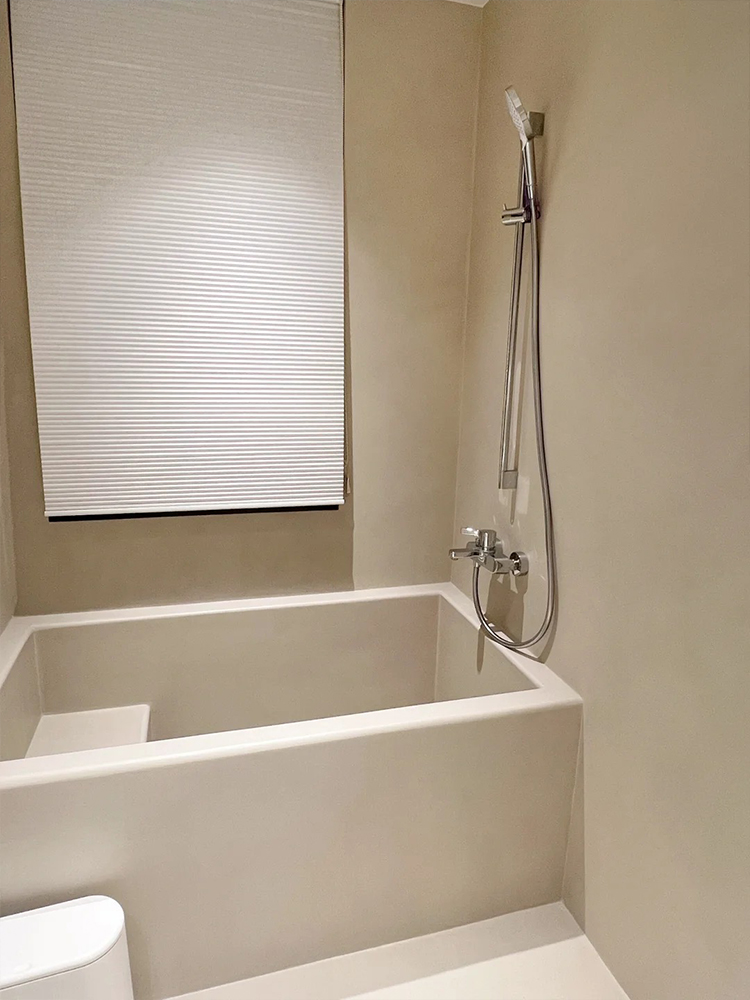
For contractors and developers who need an outdoor microcement system that actually survives the elements, THE AIKE delivers four advantages that cut your project risk:
Complete exterior coating system from one source. Our outdoor microcement pairs with a universal exterior paint line and a dedicated floor-specific system, so you source the entire project envelope from a single supplier with consistent batch-to-batch quality control. No juggling three vendors for one facade.
UV- and weather-stable formulas backed by 20+ years of coatings R&D. Our core team's 16 years in construction means the build-up sequences we spec aren't lab theories—they're tested on real facades, patios, and pool decks across export markets on six continents.
Full-process technical support. From substrate assessment and moisture testing to topcoat selection and on-site application guidance, our engineering team walks your crew through every layer so you don't guess.
Export-ready compliance. Complete trade documents, VOC declarations, and international certifications come standard, so your distributor or developer clears procurement and green-building checks without extra red tape.
Contact us today for a free outdoor microcement sample, a customized build-up specification for your next project, and full technical support from our expert team.
“ Contact AIKE Team ”
__________
在线留言
Name*
E-mail*
Country*
Application Areas*
Tel / WhatsApp
Requirement
Business Supervisor:Mr. Bin Zhu


Social media account


