
Microcement Countertops vs Quartz
Why Designers Are Replacing Quartz with Microcement Countertops
Here's a fact most spec sheets won't tell you: quartz breaks at the edge. The moment a slab exceeds 6 feet in run or hits a right-angle corner without support, you're looking at cracks, chipping, or a full replacement. Microcement countertops eliminate that failure mode entirely. No seams. No joints. No edge-to-edge fragility.
For interior designers working on compact kitchens, boutique hotel lobbies, or renovation projects where existing tile meets new work, this isn't a "nice-to-have." It's the difference between a spec that survives handover and one that ends up in a warranty claim within 18 months.
The Numbers That Actually Matter on Site
A standard 2–3 mm microcement countertop system (base + microcement + protective top coat) applies directly over existing ceramic tile, cement board, or even well-prepped laminex. No demolition. No waste disposal. A two-person crew can finish a 4-meter kitchen counter in under six hours including curing time.
Quartz, by contrast, needs off-site fabrication (5–10 day lead time), precise template measurements, and adhesive mounting. Any substrate irregularity above 2 mm becomes a stress point.
Cost per square meter (material only, excluding labor):

Microcement system: $45–$75/sqm
Engineered quartz slab: $80–$150/sqm
Honed natural stone: $120–$250/sqm
The gap widens further on renovation jobs where demolition labor is zero for microcement.
Where Microcement Countertops Win and Where They Don't
Seamless joints, full color-and-texture customization, and direct-over-substrate application make microcement ideal for:
Feature walls that flow into countertop surfaces (kitchen islands, wet bars)
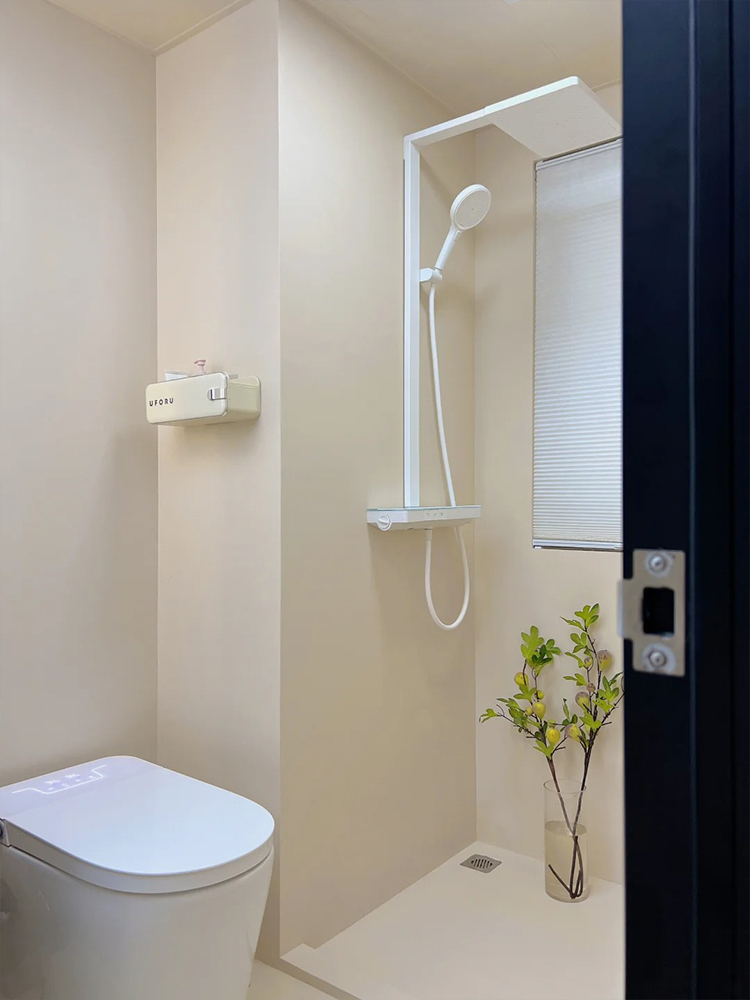
Bathroom vanity tops needing waterproofing (pair with a sealing top coat)
Commercial hospitality counters where brand texture matters
Where it's less suited: high-heat zones adjacent to open gas ranges (allow a 50 mm buffer) or heavy-impact industrial workbenches.
Quick Comparison: Microcement vs Quartz Countertops
The Bottom Line
If your project demands a seamless, brand-differentiated surface on tight timelines—especially over existing tile or in compact residential units—microcement countertops deliver with fewer variables, lower total installed cost, and zero edge-cracking risk. Quartz remains the safer default for open-flame cooking zones, but for the bulk of kitchen, bathroom, and commercial counter applications, the microcement system is the faster,leaner choice.
Why Choose Us
For contractors, designers, and distributors specifying microcement countertops:
One-shipment full system: Primer, microcement, textured finish, and waterproof sealing top coat—pre-matched and shipped together. No multi-vendor coordination.
Spray + trowel dual application: Cuts skilled-labor dependency by 40 % on large commercial counter runs; built for Middle East and Southeast Asia project teams.
Direct-over-substrate performance: Apply straight onto existing ceramic, cement board, or gypsum. No tile removal. No new carpentry. Renovation projects stay on schedule.
VOC-free, eco-friendly formula: Complies with EU, US, and GCC green-building standards out of the box.
Request a free product sample and a customized countertop coating plan for your next project today.
“ Contact AIKE Team ”
__________
在线留言
Name*
E-mail*
Country*
Application Areas*
Tel / WhatsApp
Requirement
Business Supervisor:Mr. Bin Zhu


Social media account


