
Bathroom Walls with Microcement: The No-Grout Upgrade
The Grout Problem You're Done Solving
Every renovation contractor knows the complaint: "Why does my bathroom grout turn green again within two years?" In high-humidity spaces, tile grout cracks, mildews, and forces repeated re-grouting cycles. Interior designers face the same issue on commercial projects—hotel bathrooms, spa interiors, and boutique retail washrooms demand a seamless, low-maintenance finish that holds up for years. Bathroom walls with microcement eliminate the grout line entirely, replacing it with a continuous, trowel-applied surface that resists moisture without peeling or staining.
How Microcement Solves the Bathroom Wall Problem
The application is straightforward for any crew already comfortable with skim-coat or plaster work. You spray a primer-anchoring layer onto the existing tile, cement board,or plaster—no demolition, no sanding down to bare substrate. Two to three coats of microcement build up to a 2–3 mm finished thickness, thin enough that door hinges and cabinet hardware still line up. A final breathable sealing top coat locks in the waterproof system, making the wall suitable for direct water contact in showers and wet rooms.
The key difference from conventional paint: microcement is a mineral-based, vapor-permeable finish. It does not trap moisture behind a film, so the wall "breathes" and resists the blistering and delamination that plagues standard emulsions in constantly wet rooms. For a contractor bidding on a hotel refurbishment across 120 bathrooms, that single specification change saves an estimated 8–12 hours of wall prep per room.
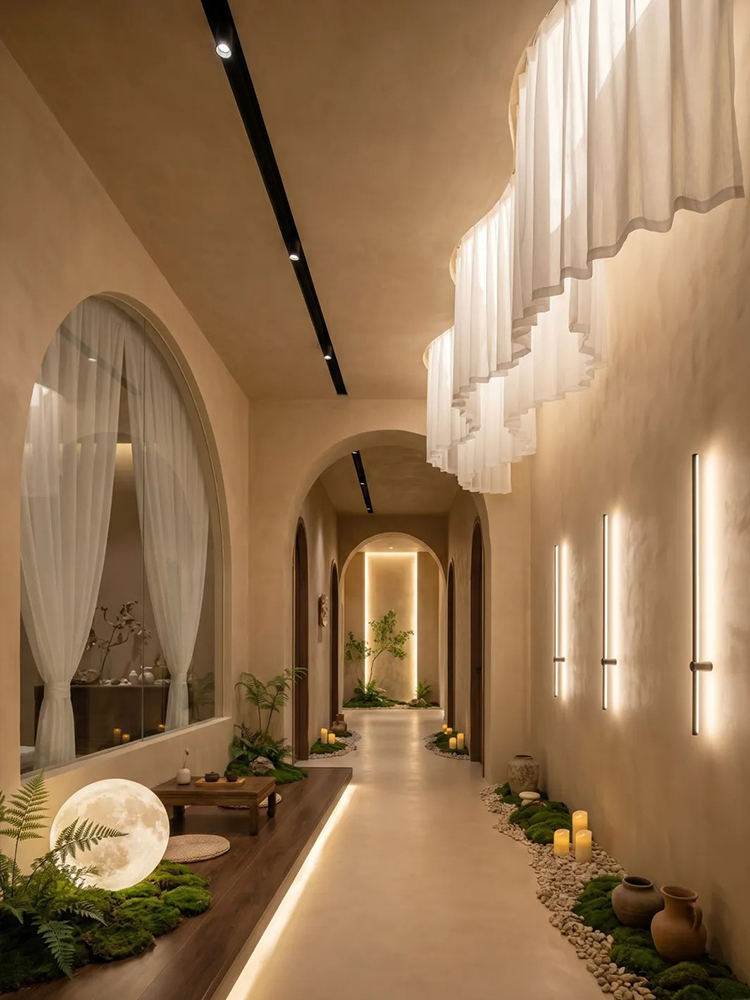
Microcement vs. Tile vs. Painted Walls: What Actually Wins in a Bathroom
For a designer specifying a boutique hotel's en-suite suite, the seamless visual continuity across wall, niche, and floor corner is the single strongest selling point—something tile and paint simply cannot replicate.
What to Check Before You Specify
Confirm the product includes a dedicated waterproof top coat; not every "microcement" brand formulas one.

Verify adhesion data on your specific substrate (ceramic tile, cement board, gypsum board).
Ask the supplier for a small 1 m² test panel in the actual bathroom lighting before full rollout.
Confirm the system is water-based and low-VOC if the project targets LEED, BREEAM, or Middle East green-building codes.
Key Takeaway
Bathroom walls with microcement trade a few extra trowel passes for a decade-long maintenance cycle. For contractors, that means fewer call-backs and higher client satisfaction. For designers, it unlocks a warm, monolithic aesthetic that flat paint and rigid tile can't deliver. The numbers on project duration and lifecycle cost favor it clearly in any specification over 20 rooms.
Why Choose THE AIKE for Bathroom Microcement Projects

Full waterproof system, one supplier. Our microcement line pairs with a dedicated sealing top coat, so you source the entire wet-wall solution from a single manufacturer—no compatibility guesswork across brands.
Apply over existing tile, zero demo. The primer-anchoring layer bonds directly to ceramic, cement, and gypsum substrates. Your crew skips the most labor-intensive step and keeps the project on schedule.
Spray + trowel dual method. For a 200-room hotel bathroom project, spray application cuts labor hours by up to 40 % versus full hand-troweling, while the trowel finish delivers the textured, high-end look on feature walls.
Export-ready documentation. Complete trade files, material safety data sheets, and green-certification support ship with every container to 6 continents, so your customs and QA teams hit no surprises.
Contact us today for a free product sample, substrate-adhesion test panel, and a customized bathroom coating solution with full technical support.
“ Contact AIKE Team ”
__________
在线留言
Name*
E-mail*
Country*
Application Areas*
Tel / WhatsApp
Requirement
Business Supervisor:Mr. Bin Zhu


Social media account


