
Buying Microcement Products for Commercial Projects: A 2026 Procurement Guide
The High-Stakes Reality of Decorative Floor and Wall Procurement
In the current global construction landscape, the shift toward seamless, continuous surfaces has made microcement a non-negotiable specification for many commercial and high-end residential developers. Yet, for procurement managers, project owners, and distribution networks, the market is flooded with conflicting claims. Vendors often push the narrative that all microcement products are the same, differing only in label and price. This is a dangerous assumption. The reality is that the performance delta between a high-grade, polyurethane-enhanced system and a basic cementitious slurry is profound. One delivers a surface that withstands heavy foot traffic, chemical exposure, and thermal stress for decades. The other cracks, delaminates, or fades within a few years.
For contractors and investors, the decision to source specific microcement products is not just about aesthetics; it is a risk management exercise. A failed application in a hotel lobby or a corporate headquarters results in costly remediation, reputational damage, and legal liability. This guide breaks down the technical architecture of modern microcement, explains why formulation matters more than marketing, and provides a strategic framework for selecting suppliers who can deliver consistent, high-performance results across multiple continents.
Beyond the Aesthetic: The Technical Core of Modern Microcement
To understand why certain microcement products outperform others,you must look past the final finish and examine the chemical composition. Traditional cement-based overlays are often brittle. They lack the flexibility to handle the structural movement of modern buildings. Leading-edge microcement formulations now integrate flexible polyurethane binders with fine-grade minerals. This hybrid structure allows the coating to expand and contract with the substrate, maintaining integrity on wood, metal, or concrete.
However, flexibility is only one factor. Adhesion is the primary failure point. Many low-cost microcement products rely on standard latex primers that fail under humidity or weight. High-specification systems use two-component epoxies or specialized adhesion promoters that chemically bond to the base layer. When evaluating a supplier, ask for the pull-off test results. In a robust system, failure should occur within the substrate (concrete or wood), not at the bond line. If the material detaches from the base, the adhesion system is inadequate for commercial durability.
Another critical component is the topcoat. Microcement is porous by nature. Without a sealed finish, it absorbs oils, stains, and bacteria. The standard in the industry has moved toward water-based polyurethane or 2K epoxy topcoats. Water-based options offer zero VOC emissions and high clarity, making them ideal for eco-certified projects. Epoxy options provide superior chemical resistance, suitable for kitchens and industrial zones. A reliable supplier will not just sell you "paint"; they will sell you a system: primer, base coat, finishing layer, and topcoat, all calibrated to work together.

The Global Sourcing Challenge: Consistency Across Batches
For distributors operating in multiple regions or contractors managing large-scale site works, consistency is the biggest hurdle. Microcement is a reactive material. Slight variations in raw material sourcing—such as different mineral aggregates or binder lots—can result in visual mismatches between batches. This "lottle-ing" effect can ruin a large interior space.
Quality control is not just about testing the final product; it is about supply chain transparency. Top-tier manufacturers maintain strict raw material specifications and batch traceability. For a commercial project requiring 5,000 square meters of installation, you need a supplier who can guarantee that the first 100 units and the last 100 units look identical. This requires a manufacturing facility with advanced mixing technology and a rigorous quality assurance protocol that tests adhesion, flexibility, and color consistency before shipment.
Furthermore, the logistics of microcement products are complex. These materials are often heavy, hygroscopic (absorb moisture from air), and sensitive to temperature. A supplier who lacks cold-chain logistics or proper packaging will deliver degraded material, leading to poor application results. The "cheapest" option often becomes the most expensive when you factor in waste, rework, and material that arrived damaged or expired.
Comparing Formulations: Water-Based vs. Epoxy vs. Polyurethane
Choosing the right microcement products depends heavily on the end-use environment. The following comparison highlights the technical distinctions between the three dominant formulation types.

Note: Water-based systems are the current market leader for interior design due to their eco-compliance and lack of yellowing. Epoxy systems are reserved for high-abrasion areas where chemical resistance outweighs UV stability. Polyurethane systems offer the best balance of flexibility and durability for high-end commercial projects.
Strategic Sourcing: Selecting a Supplier for Long-Term Value
When you are ready to finalize your procurement strategy, do not just look at the price per kilogram. Evaluate the supplier based on three pillars: Technical Support, Certification, and Service.
1. Technical Support: Microcement application is a craft. A supplier who provides detailed technical data sheets (TDS), safety data sheets (SDS), and video training is essential. For large projects, on-site technician support can prevent catastrophic errors. Look for partners who offer "full-process technical empowerment," guiding you from substrate preparation to final sealing.
2. Certification: For global projects, especially in Europe and North America, compliance with ISO standards and eco-labels is mandatory. Ensure your microcement products meet CE marking requirements and local VOC regulations. A supplier who provides complete trade documents and certification support reduces your administrative burden and risk.
3. Service Model: B2B customers need more than a warehouse; they need a partner. Does the supplier offer color customization? Can they match a specific RAL or Pantone code for your brand identity? Do they provide a unified supply chain for multiple product lines? A partner who offers a full-category system allows you to source walls, floors, and even decorative elements from one source, simplifying logistics and ensuring design continuity.
Why Choose Us
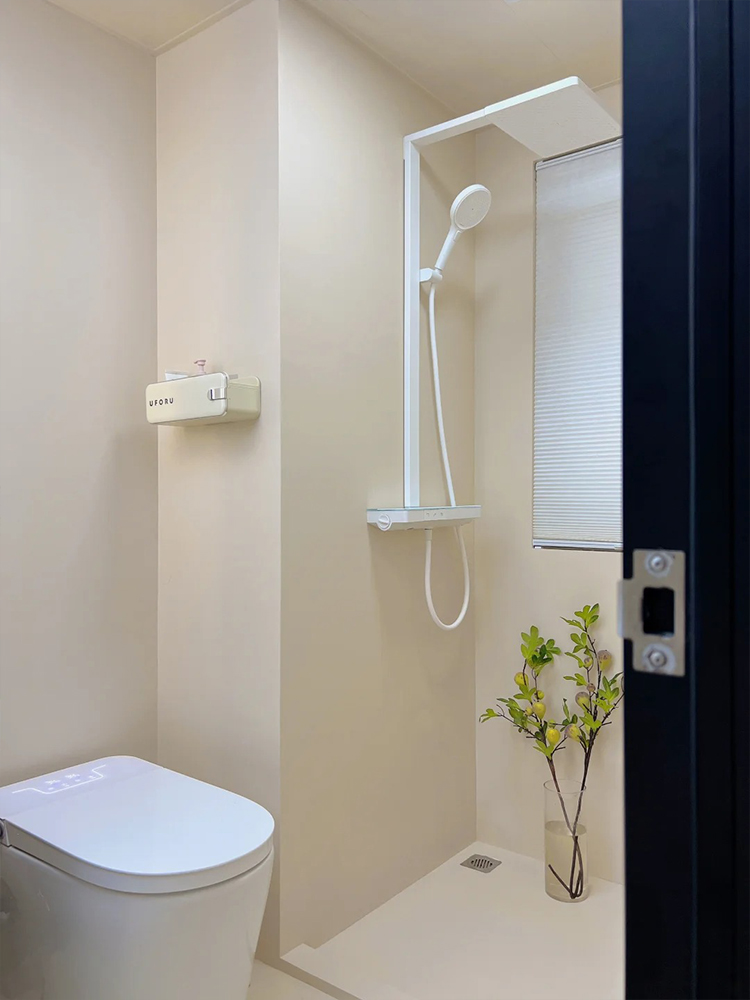
For contractors, distributors, and developers seeking reliable microcement products that balance premium performance with cost efficiency, THE AIKE Paint offers a strategic advantage.
Full-Category System with Unified Quality: We provide a complete interior and exterior coating matrix, including Microcement, Stucco Texture, and Eggshell Paints. This allows for a single-point supply chain, reducing logistics complexity and ensuring consistent quality across different zones of a project.
Engineering-Grade Durability: Our microcement formulations are designed for high-traffic commercial spaces. We combine advanced binders with scratch-resistant topcoats, ensuring the surface remains intact in high-wear areas like hotel lobbies and retail floors, protecting your long-term operational costs.
Global Compliance and Export Support: With mature export services across 6 continents, we handle the logistical and regulatory heavy lifting. We provide complete trade documents and full certifications to fit global project cooperation, ensuring your procurement process is seamless and compliant with international green standards.
Expert Technical Empowerment: Our team, backed by 20+ years of coatings expertise, offers full-process support. From substrate assessment to final color matching, we provide the technical guidance necessary to achieve a flawless finish, whether you are a contractor managing a large site or a designer creating a unique feature wall.
Contact us today for a free product sample and customized coating solution. Request a free project quotation and full technical support now to secure your supply chain.
“ Contact AIKE Team ”
__________
在线留言
Name*
E-mail*
Country*
Application Areas*
Tel / WhatsApp
Requirement
Business Supervisor:Mr. Bin Zhu


Social media account


