
How to Apply Microcement on Walls: Professional Contractor's Step-by-Step Guide
Microcement Wall Application: The Practical Guide Every Contractor and Designer Needs
If you have ever stood in front of a wall that needs a complete visual transformation, only to realize that traditional tile or paint is too time-consuming, costly, or aesthetically limiting, microcement offers a compelling solution. Across residential renovation projects, hotel refurbishments, and commercial fit-outs in the Middle East, Southeast Asia, and Europe, contractors and interior designers increasingly specify microcement for its seamless finish, industrial-modern appeal, and remarkable versatility on existing substrates.
The real challenge, however, lies not in selecting the product but in executing it correctly. Improper surface preparation, incorrect mixing ratios, or rushed application steps can lead to cracking, uneven texture, delamination, or excessive rework — all of which erode profit margins and damage professional reputation. This guide addresses the core question every project manager and specification writer asks: how to apply microcement on walls reliably, efficiently, and to a high-end finish standard.
Why Wall Application Demands a Different Approach Than Floor Coating
Before diving into the step-by-step procedure, it is essential to understand why wall microcement application carries distinct risks compared to floor systems. Walls are vertical surfaces where material slumping, sagging, and inconsistent thickness are genuine concerns. Unlike floors, walls cannot rely on self-levelling properties to correct mistakes. Gravity pulls fresh coats downward before they set, making timing, trowel technique, and layer sequencing critical.
Additionally, wall substrates vary dramatically — from new gypsum board and cement plaster to existing ceramic tile, painted drywall, and rendered masonry. Each substrate presents different adhesion challenges, moisture conditions, and surface preparation requirements. A contractor who applies the same preparation protocol across all wall types will inevitably encounter bond failure or finish inconsistency. Understanding substrate-specific requirements is therefore the first step toward mastering how to apply microcement on walls successfully.
Essential Surface Preparation: The Foundation of a Flawless Wall Finish
Surface preparation accounts for approximately sixty percent of the final result quality. Skipping or rushing this phase is the most common reason for microcement wall failure in field applications.
The process begins with structural integrity assessment. Any cracked, loose, or hollow-sounding plaster must be removed and repaired before coating. For new cement-based substrates, a minimum curing period of twenty-eight days is required to ensure that residual alkalinity and moisture levels stabilize. Applying microcement over fresh plaster traps moisture and causes efflorescence or adhesive breakdown within months.
Existing painted walls require adhesion testing. If the current paint layer is glossy, waxed, or poorly bonded, it must be mechanically abraded using coarse sandpaper or a grinding disc, then cleaned of all dust and grease. Glossy enamel surfaces, common in older commercial buildings, will repel primer unless properly roughened.
For tile-to-microcement conversions — one of the fastest-growing segments in hotel and bathroom renovations — the critical factor is removing surface gloss without damaging the tile body. Light sanding or acid etching creates a mechanical key. Grout lines deeper than five millimeters must be filled with a flexible patching compound to prevent telegraphing through the thin microcement layers. In high-humidity zones such as bathrooms and kitchens, a waterproofing primer or membrane is mandatory beneath the decorative microcement system.
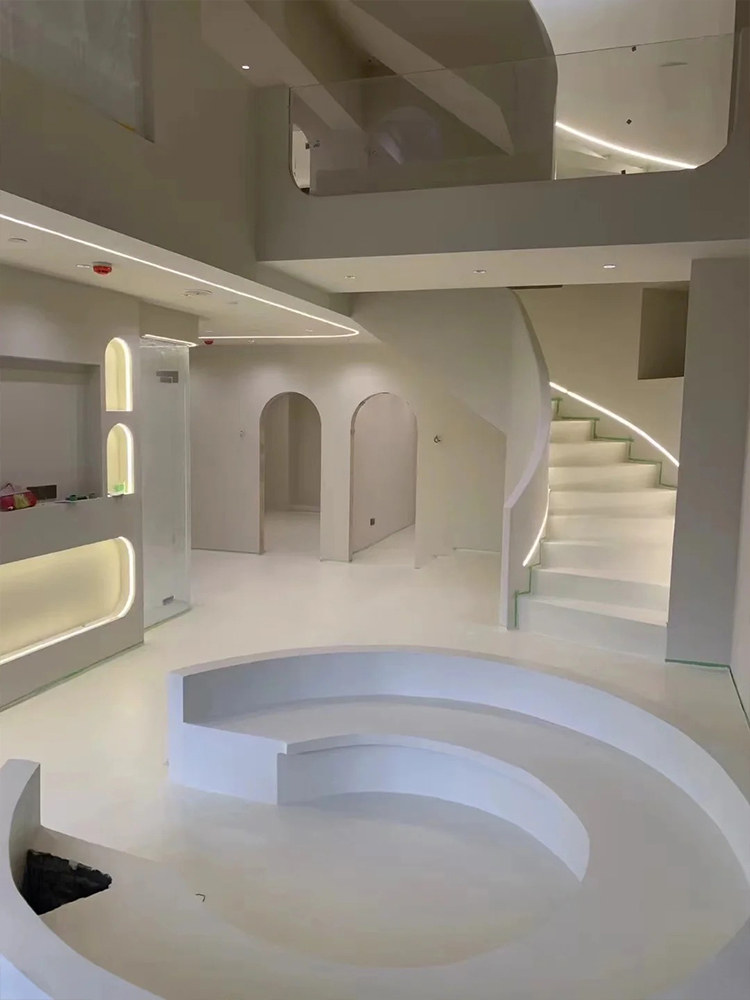
The Correct Layer System for Wall Microcement Application
A professional wall microcement system follows a precise three-layer architecture, each serving a specific structural and aesthetic function. Deviating from this sequence compromises durability and visual uniformity.
The first layer is the reinforcing primer. This product penetrates the substrate, stabilizes porosity, and provides the initial bonding bridge. On highly absorbent surfaces such as bare plaster or concrete block, an isolating primer is applied to control suction and prevent rapid moisture loss from the microcement mix.
The second layer is the base coat of microcement, typically applied at a thickness of one to two millimeters. This layer carries the structural reinforcement from embedded fiberglass mesh, which is pressed into the wet coat while it is still pliable. The mesh prevents shrinkage cracking and provides tensile strength across large uninterrupted wall areas. For wall sections exceeding two square meters without control joints, mesh reinforcement is non-negotiable.
The third and final layer is the finish coat, applied at approximately one millimeter thickness. This is where surface texture, colour uniformity, and topcoat sealing are achieved. The finish coat must be applied with consistent trowel pressure and overlapping strokes to avoid visible ridges or colour variation. After curing, a protective sealant — either matte, satin, or gloss — is applied to enhance stain resistance and durability, particularly in high-touch or moisture-exposed areas.
Application Technique: Trowel Method Versus Spray-Assisted Application
When evaluating how to apply microcement on walls, the choice between manual trowel application and spray-assisted systems directly impacts labour cost, timeline, and finish quality.
Traditional hand troweling remains the standard for small to medium residential projects, feature walls, and custom architectural details. The advantage lies in precision control — the applicator can adjust thickness locally, blend transitions around switches and sockets,and create intentional textured effects. However, this method demands experienced technicians, and inconsistent trowel pressure across a large wall surface often results in visible colour variation once the sealer is applied.
Spray-assisted application has gained significant adoption among contractors executing volume projects such as apartment complexes, fast-track hotel refurbishments, and commercial retail spaces. A specialized spray unit applies the base coat evenly and rapidly, after which the mesh is embedded and the surface is smoothed with a trowel. This hybrid approach reduces labour time by up to forty percent on large wall areas while maintaining the ability to hand-finish edges and joints for a seamless appearance.
For contractors deciding between these two methods, the determining factors include project scale, team skill level, substrate condition, and finishing tolerance. A spray-first, trowel-finish workflow is increasingly the industry best practice for efficiency without sacrificing quality.
Common Mistakes That Degrade Wall Microcement Performance
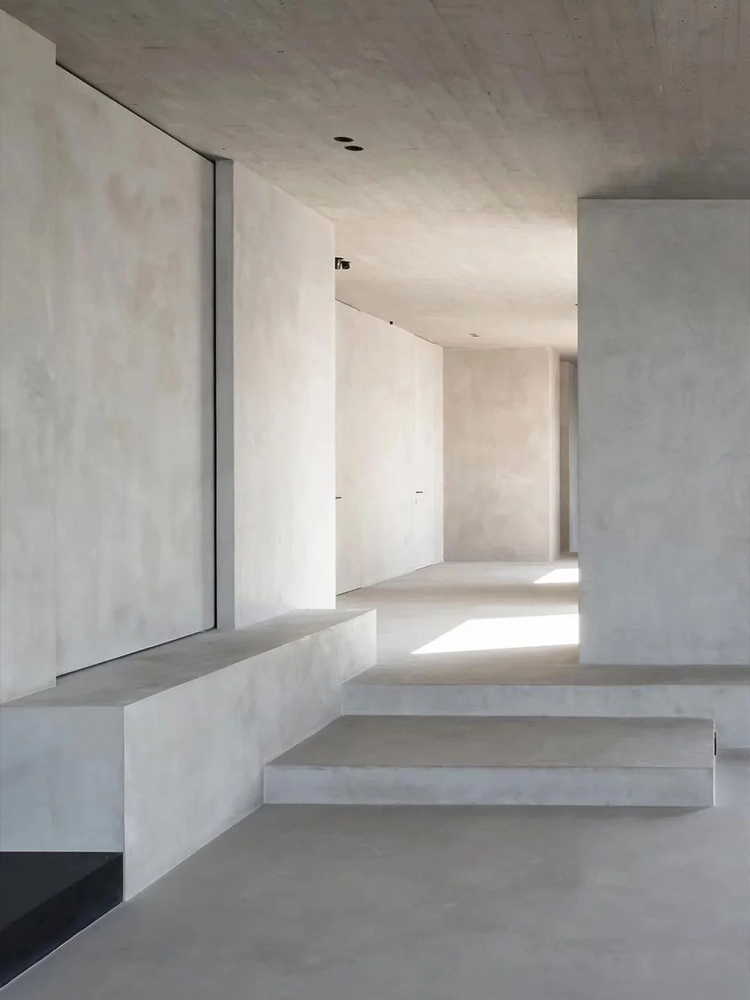
Understanding what not to do is as valuable as knowing the correct procedure. The following errors appear repeatedly in post-project failure analyses across international markets.
Applying microcement in extreme temperatures — below ten degrees Celsius or above thirty-five degrees Celsius — disrupts the curing chemistry. Rapid drying in hot conditions causes surface skinning while the underlying layer remains weak, leading to delamination. In cold environments, the polymer binders do not coalesce properly, resulting in powdery, low-adhesion finishes that cannot be corrected by additional sealing.
Over-wetting the substrate during preparation is another frequent mistake. Excess water weakens existing plaster, promotes mould growth behind the coating, and dilutes the primer’s bonding agents. Substrates should be damp, not saturated, before primer application.
Using a single thick coat instead of the recommended multi-layer system is a cost-cutting error that guarantees failure. Thin-layer application allows proper curing between coats and ensures the embedded mesh is fully encapsulated. Attempting to build thickness in one pass traps air, creates internal stress, and produces cracking within weeks of completion.
Finally, skipping the sealant or using an incompatible topcoat undermines the entire investment. Microcement is inherently porous. Without a proper sealant, it absorbs stains, moisture, and dirt — unacceptable for kitchen backsplashes, bathroom walls, or high-traffic commercial interiors.
Comparing Application Methods: Hand Trowel Versus Spray-Assisted Wall Coating
Contractors and project managers should select the method that aligns with their specific project parameters rather than applying a one-size-fits-all approach. Many successful teams now deploy spray-assisted application for primary wall surfaces and reserve hand troweling for detailed trims, corners, and decorative textures.
Choosing the Right Microcement Supplier for Wall Projects
The application technique is only as effective as the product being applied. When sourcing microcement for wall projects, several performance criteria should dictate supplier selection.
First, verify that the product system is specifically engineered for vertical application. Floor-oriented microcements often have higher aggregate content and different rheology, making them prone to sagging on walls. Wall-specific formulations are designed with thixotropic properties that maintain position after application while still allowing smooth trowel finishing.
Second, confirm that the supplier provides a complete system — primer, base coat, finish coat, mesh, and sealant — from a single manufacturing source. Mixing components from different manufacturers introduces compatibility risks and voids technical warranties. A unified system ensures chemical compatibility, consistent curing behaviour, and predictable long-term performance.
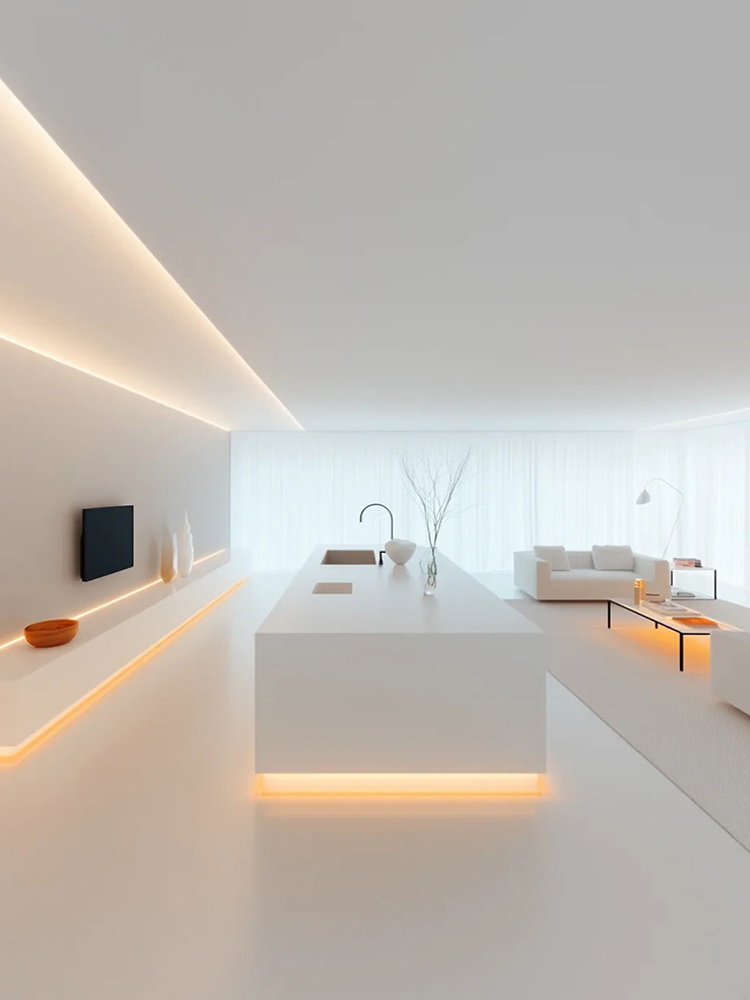
Third, evaluate the supplier’s technical support capability. Successful wall microcement projects depend on pre-application substrate assessment, on-site guidance for complex geometries, and responsive after-sales support if adjustments are needed during construction. Suppliers that offer only product supply without technical empowerment leave contractors exposed to avoidable risk.
Certification and compliance documentation should also be reviewed. Projects in Europe require REACH compliance and EN standard certifications. Middle Eastern and Southeast Asian developments increasingly mandate low-VOC declarations and fire-rating documentation for interior wall coatings. A reputable manufacturer provides complete trade and compliance documentation to support international project procurement.
Conclusion: Mastering Microcement Wall Application for Professional Results
Learning how to apply microcement on walls is not simply a matter of following a tutorial. It requires a systematic understanding of substrate preparation, layer sequencing, climate-controlled application, and method selection based on project scale and timeline. The difference between a flawless microcement wall and a failed one often comes down to preparation rigor, product system coherence, and technical support availability.
Contractors who invest in proper training, use dedicated wall-formulated microcement systems, and partner with suppliers that provide full-process technical empowerment consistently deliver higher-quality finishes, fewer rework calls, and stronger client referrals. For interior designers specifying seamless wall solutions, the ability to choose the right product system and application method directly affects both aesthetic outcome and project profitability.
For developers and distributors, supplying a complete, certified, and technically supported microcement wall system positions them competitively in markets where seamless interior finishes are in growing demand. The key is selecting a partner that combines product reliability with actionable technical knowledge tailored to wall-specific challenges.
Why Choose Us
THE AIKE Paint specializes in wall-engineered microcement systems designed for the precise demands of vertical surface application. Our wall-specific formulations feature thixotropic rheology that prevents sagging while maintaining smooth trowel finishability, ensuring contractors achieve consistent results across residential, commercial, and hospitality projects.
We provide a complete closed-system solution — from reinforcing primer and mesh-encapsulating base coat to finish coat and protective sealant — eliminating compatibility risks and guaranteeing performance longevity. Every product line complies with international environmental and safety standards, including REACH and low-VOC requirements, supporting seamless certification for global project procurement.
Our technical support team offers pre-application substrate assessment guidance, on-site application consultation, and post-installation troubleshooting, helping contractors reduce rework and protect project margins. Whether you are executing a small bathroom renovation or a large-scale hotel refurbishment, we deliver the product consistency and professional backing you need to apply microcement on walls with confidence.
Request a free project quotation and full technical support now.
“ Contact AIKE Team ”
__________
在线留言
Name*
E-mail*
Country*
Application Areas*
Tel / WhatsApp
Requirement
Business Supervisor:Mr. Bin Zhu


Social media account


