
Microcement Badeværelse: The Complete Guide for Waterproof, Seamless Bathroom Walls & Floors
Why Microcement Badeværelse Is the Smartest Choice for Modern Bathroom Renovations
If you are a contractor, interior designer, or real estate developer working on bathroom projects in Scandinavia or across Europe, you have likely encountered the growing demand for microcement badeværelse—microcement bathrooms. Homeowners and commercial property owners are moving away from traditional tiles and seeking a seamless, waterproof, and visually striking alternative. But here is the real question: Is microcement truly suitable for wet areas like bathrooms? And how do you select the right system to avoid costly failures?
The short answer is yes—but only if you use the correct microcement system, apply it properly, and work with a supplier who understands the technical demands of bathroom environments. This guide is written for B2B buyers—contractors, distributors, and designers—who need practical, actionable information about specifying and installing microcement in bathrooms.
The Real Business Problem: Tile Failures, Water Damage, and Renovation Costs
Let's be direct about the pain points driving the microcement badeværelse trend across Denmark, Sweden, Norway, and the broader European market.
The Tile Problem
Traditional tile bathrooms come with grout lines—the weakest point in any wet-area installation. Grout cracks, absorbs moisture, and becomes a breeding ground for mold and mildew. Within 3-5 years, many tiled bathrooms in high-humidity environments show visible degradation. For contractors, this means callbacks, warranty claims, and damaged reputations.
The Renovation Cost Problem
Removing existing tiles is messy, expensive, and time-consuming. Demolition creates dust, requires waste disposal, and extends project timelines. For a typical 8-10 m² bathroom, tile removal alone can add 3-5 days to the schedule and €800-€1,500 in labor and disposal costs. For property developers renovating multiple units, these costs multiply quickly.
The Aesthetic Demand Problem
Modern bathroom design trends—particularly in Nordic and high-end commercial projects—demand seamless surfaces. Designers want continuous finishes that create a spa-like atmosphere. Tiles simply cannot deliver this. Microcement badeværelse offers the seamless, monolithic look that high-end clients are asking for.
Microcement Badeværelse vs. Traditional Tiles: An Honest Comparison
Before you specify microcement for a bathroom project, you need a clear picture of how it stacks up against conventional options. Here is a practical comparison based on real-world project experience:
Key Takeaway for Contractors: Microcement badeværelse is not just an aesthetic upgrade—it is a business efficiency upgrade. You eliminate demolition costs, shorten project timelines, and reduce the risk of moisture-related callbacks. For renovation-heavy markets like Denmark and Germany, this is a significant competitive advantage.
The Microcement Badeværelse System: What You Actually Need
Many contractors make the mistake of treating microcement like paint. It is not. A successful microcement bathroom installation requires a complete system. Here is what you need to specify:
1. Substrate Preparation
The existing surface must be sound, clean, and free from loose material. Microcement can be applied over tiles, cement screed, gypsum board, or existing plaster. Cracks must be repaired, and the surface must be primed with a suitable bonding primer.
2. Microcement Base Coat
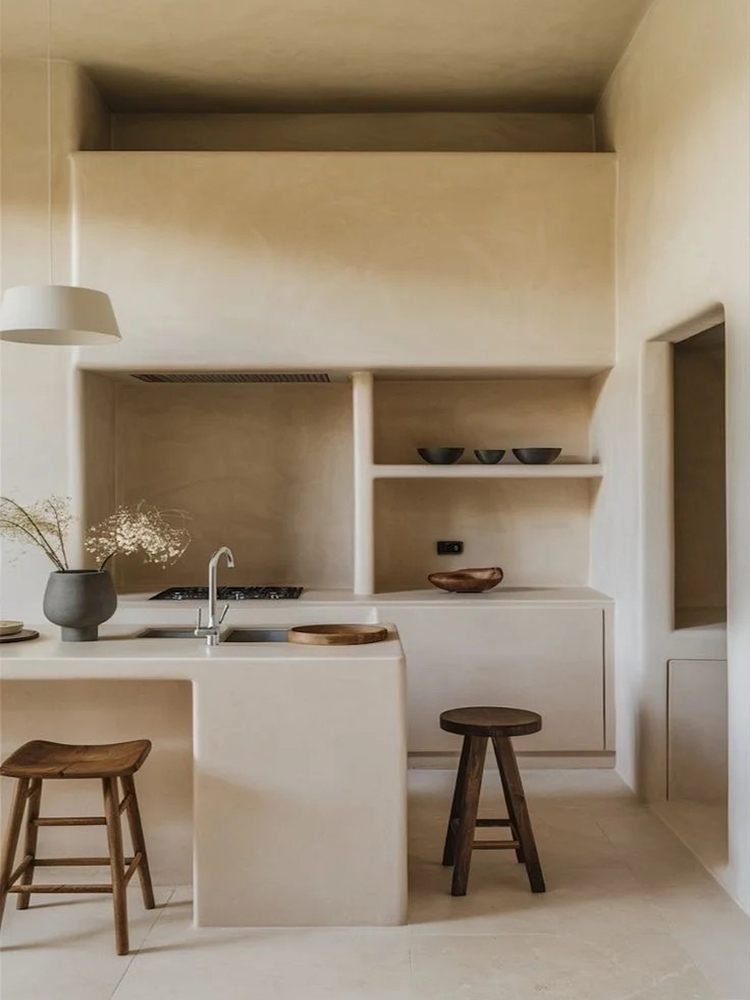
A polymer-modified cementitious base coat is applied in a thin layer (1-2mm) to create a uniform substrate. This layer provides adhesion and levels minor imperfections.
3. Microcement Finish Coat
The decorative layer—typically applied in two thin coats (0.5-1mm each)—creates the final aesthetic. This is where color and texture are established. For bathrooms, a finer aggregate finish is recommended for a smoother surface that is easier to clean.
4. Sealing System (The Critical Step)
This is where most failures occur. Microcement is porous by nature. In a bathroom, it must be sealed with a specialized waterproof top coat. A high-quality polyurethane or acrylic-based sealer creates a continuous waterproof membrane. For shower areas and floors, two coats of sealer are typically required, with the first coat diluted for deeper penetration.
5. Edge and Joint Sealing
Where microcement meets other materials (bathtubs, shower trays, windowsills), a flexible silicone sealant must be applied. This prevents water from penetrating behind the microcement layer.
The Cost of Cutting Corners: Using a cheap or incorrect sealer is the #1 cause of microcement bathroom failures. If water penetrates the microcement layer, it will delaminate from the substrate, causing bubbling and cracking. This is not a product failure—it is a system failure.
Choosing the Right Microcement Supplier for Bathroom Projects
Not all microcement products are created equal, and not all suppliers understand bathroom-specific requirements. Here is what you should evaluate when selecting a supplier for your microcement badeværelse projects:
Red Flag: If a supplier cannot clearly explain their waterproofing system for bathrooms, walk away. This is not a product you want to learn on the job.
How to Price Microcement Badeværelse Projects for Profit
For contractors, pricing microcement bathrooms correctly is essential for profitability. Here is a practical pricing framework:
Cost Components to Include:
Material cost (base coat, finish coat, primer, sealer, silicone)
Labor (typically 2-3 workers for a standard bathroom)
Surface preparation time
Drying time between coats (typically 4-6 hours per coat)
Waste and consumables (mixing paddles, rollers, brushes, masking tape)
Travel and logistics
Margin for callbacks (even with perfect installation, budget 2-3%)
Typical Pricing Structure for a 10 m² Bathroom (Walls + Floor):
Profit Margin: 40-50% is achievable if you price correctly and work efficiently. The key is to avoid underestimating labor time for the sealing process—this is where most contractors lose money.
Design Trends Driving Microcement Badeværelse Demand
Understanding what your clients want helps you sell more projects. Here are the current trends in microcement bathroom design across Europe:
1. The Nordic Minimalist Look
Light gray and warm beige microcement finishes with matte sealers. This aesthetic dominates Scandinavian markets—clean, calm, and understated. Designers pair it with matte black fixtures and natural wood accents.
2. The Spa Retreat Concept
Full microcement coverage—walls, floor, and even the shower bench—creates a continuous, resort-like feel. This is popular in high-end residential and boutique hotel projects. The seamless finish is the main selling point.
3. The Industrial Loft Style
Darker gray and charcoal microcement with a slightly textured finish. This works well in urban apartments and commercial spaces like cafés and salons. Clients want the raw, unfinished look without the maintenance issues of actual concrete.
4. The Wet Room Revolution
Full wet-room bathrooms—where the shower area is open and floor-level—are increasingly specified with microcement because it eliminates the need for shower trays and simplifies the waterproofing design.
Common Microcement Badeværelse Mistakes and How to Avoid Them
Based on real project experience, here are the most common failures and how to prevent them:
Mistake #1: Skipping the Primer
Some contractors skip the bonding primer to save time. This is a fatal error. Without proper priming, the microcement will not adhere correctly, leading to delamination within months.
Solution: Always use the primer specified by the supplier. Do not substitute with a generic primer.
Mistake #2: Insufficient Sealing
Applying one coat of sealer when two are required is a common cost-cutting mistake. In a bathroom, this almost guarantees water damage over time.
Solution: Follow the supplier's sealing specification exactly. For shower areas and floors, always apply two coats.
Mistake #3: Ignoring Drying Times
Microcement requires specific drying times between coats. Rushing the process traps moisture, causing bubbles and cracks.
Solution: Respect the drying times. Use dehumidifiers to accelerate drying in humid conditions.
Mistake #4: Poor Edge Detailing
Where microcement meets other materials, water can penetrate if the joint is not properly sealed.
Solution: Use a high-quality flexible silicone sealant at all transitions—bathtubs, shower trays, and floor drains.
The Bottom Line: Microcement Badeværelse Is a Growth Opportunity
For contractors, designers, and distributors, microcement bathroom solutions represent a significant business opportunity. The demand is driven by clear market trends: homeowners want seamless, modern bathrooms; developers want cost-effective renovation solutions; and designers want the creative freedom that microcement provides.
But success depends on using the right system, working with a supplier who provides real technical support, and pricing your projects correctly. When done right, microcement badeværelse projects deliver higher margins than traditional tiling, faster completion times, and satisfied clients who refer you to others.
Why Choose Us
When you specify microcement for bathroom projects, you need a supplier who understands the technical demands of wet areas and the commercial realities of your business. THE AIKE Paint delivers on both fronts:
Complete Waterproof System: Our microcement range includes a dedicated sealing system designed for bathrooms and high-humidity spaces. The exclusive waterproof formula, paired with a special sealing top coat,forms a complete protective barrier—expanding your project opportunities and reducing callback risk.
Application Over Existing Surfaces: Our microcement applies directly over tiles, cement, and gypsum board without demolition. This slashes renovation costs and shortens project timelines—core advantages for bathroom renovation projects. The ultra-thin 2-3mm finish does not affect door or window operation, simplifying installation.
Dual Application System: Our microcement supports both trowel and spray application. Spraying speeds up large-area work and is easier to master, reducing your reliance on highly skilled labor and enabling faster team training for standardized, replicable results.
Eco-Friendly, Globally Certified: Our water-based, low-VOC formulas align with European green building trends and meet international certification standards. This helps you win high-end residential and commercial projects that require verified environmental compliance.
Contact us today for a free product sample and a customized microcement badeværelse system recommendation. Get the technical support, pricing advantage, and reliable supply you need to win more bathroom projects and grow your business.
“ Contact AIKE Team ”
__________
在线留言
Name*
E-mail*
Country*
Application Areas*
Tel / WhatsApp
Requirement
Business Supervisor:Mr. Bin Zhu


Social media account


